
Why Digital Memorials Are Becoming an Important Part of Family History

For generations, families have preserved memories through photo albums, letters, home videos, scrapbooks, and stories shared around the dinner table.
Those traditions remain deeply meaningful.
But the way we create and store memories has changed dramatically.
Today, much of our personal history exists digitally: photographs on smartphones, videos stored in cloud accounts, conversations in messaging apps, posts on social media, and thousands of files scattered across devices.
This shift has created a new challenge.
How do we make sure the most important parts of a person’s life are still accessible decades from now?
One answer is the growing use of digital memorials and digital legacy platforms.
What Is a Digital Memorial?
A digital memorial is an online space created to preserve and share the story of someone’s life.
Depending on the platform, it may include:
Photographs
Videos
Biographical information
Personal stories
Important life milestones
Messages from family and friends
Tributes
Voice recordings
Family memories
Historical documents
Instead of these memories being stored separately across phones, social media accounts, and computers, a digital memorial brings them together in one organized place.
Digital Memories Can Be More Fragile Than We Think
It is easy to assume that digital photos will last forever.
But technology changes quickly.
Phones are replaced.
Hard drives fail.
Passwords are forgotten.
Cloud accounts become inaccessible.
Social media platforms change or disappear.
Even when the files still exist, family members may not know where they are stored.
As years pass, important memories can become increasingly difficult to recover.
Creating an organized digital archive helps reduce the risk of those memories becoming lost.
A Person’s Story Is More Than Photographs
Traditional photo albums are wonderful because they allow us to see important moments.
But photographs rarely tell the entire story.
Future generations may want to know:
What was this person like?
What did they believe in?
What challenges did they overcome?
What advice did they give?
What did their voice sound like?
What were their favorite stories?
Digital memorials make it possible to preserve many different parts of someone’s life, giving future generations a richer understanding of the person behind the photographs.
Families Are More Geographically Separated Today
Many families now live across different cities, countries, and continents.
This can make preserving family history more difficult.
One relative may have the old photographs.
Another may have the videos.
Someone else may remember the family stories.
A shared digital memorial allows family members to contribute memories and access them regardless of where they live.
Over time, the memorial can become a growing family archive rather than a collection owned by just one person.
Digital Memorials Can Connect Physical and Digital Memories
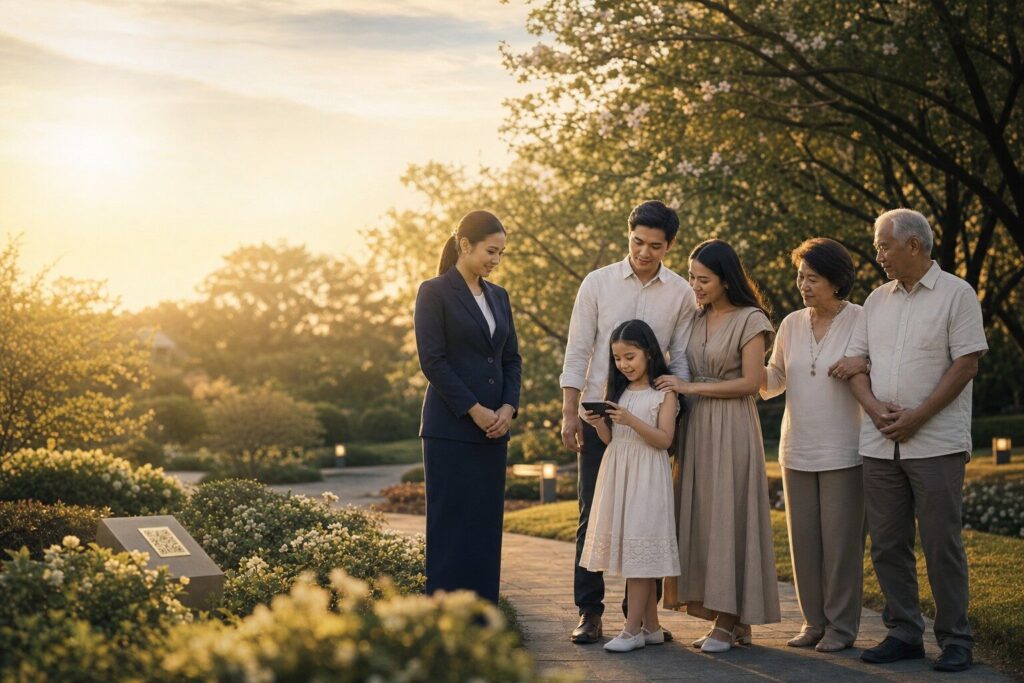
One interesting development in digital remembrance is the ability to connect physical memorials with online stories.
For example, QR-enabled memorial keepsakes can allow someone to scan a code and open a dedicated legacy page containing photographs, videos, biographies, and tributes.
This creates a bridge between a physical place or object and a much larger collection of memories.
A gravestone, urn, memorial plaque, framed photograph, or keepsake can therefore become a gateway to the person’s broader life story.
Preserving a Story Before Memories Fade
One of the most valuable things families can do is begin collecting stories while relatives are still able to tell them.
Ask parents and grandparents about their childhood.
Record family stories.
Write down where old photographs were taken.
Document the names of people in photographs.
Save important voice messages.
Capture the small details that may otherwise disappear over time.
These pieces of information may seem ordinary today, but they can become priceless to future generations.
Building a Digital Legacy
Services such as EternaLink are being developed around the idea that every life has a story worth preserving.
By bringing photographs, videos, stories, milestones, and tributes together into a dedicated Legacy Page, families can create a lasting digital record that can be revisited and shared over time.
The goal is not to replace traditional remembrance.
Photo albums, family heirlooms, handwritten letters, and physical memorials will always have their own meaning.
Instead, digital legacy platforms provide another way to protect and organize memories in an increasingly digital world.
The Stories We Preserve Become the History We Leave Behind
Family history is rarely made only from major historical events.
It is built from everyday moments.
A grandmother’s recipe.
A father’s advice.
A childhood photograph.
A family tradition.
A story that has been told at gatherings for decades.
When these memories are preserved, they become part of something larger than a single lifetime.
They become a connection between generations.
And perhaps one of the most meaningful things we can leave behind is not simply a record that someone lived, but a story that helps future generations understand how they lived and why their life mattered.